
Seniors, veterans & disabilities
Bathroom Solutions Designed Around Your Needs
Your bathroom should work for you. Houston Shower & Bath helps homeowners explore bathing solutions designed to support comfort, accessibility, and independence at home.
Prefer to talk?(346) 585-2284

Your options at a glance
Walk-in showers
What is a walk-in shower?
A walk-in shower has a low entry, or no step at all, instead of the tall wall of a bathtub. You walk in rather than climbing over the side, and you can shower standing or seated.
How is it different from a tub or a tub-shower?
With a bathtub, or a shower over a tub, you lift each leg over the side of the tub while standing on a wet surface. A walk-in shower takes that step away. A curbless walk-in shower is level with the bathroom floor, so a shower wheelchair can roll in.
Why many homeowners prefer a lower entry
It is simply easier to get in and out, with or without help, and it keeps working as needs change. Many people also like the open, modern look.
Designs, colors and finishes
Choose from durable, easy-clean wall systems in a range of colors and patterns, including stone- and tile-look designs, plus shower bases, glass doors, fixtures and accessories. We bring samples to your home so you can see them in your own light.

Accessibility features you can add
A walk-in shower is built from a base or shower floor, walls, a valve and showerhead, and usually a door or curtain. The features below are options you choose for your needs. Your written, itemized proposal lists exactly what is included.
- Grab bars. Properly anchored bars at the entry and inside the shower, placed where you naturally reach.
- Shower seating. A built-in bench or a fold-down seat, so you can shower sitting down.
- Handheld shower. A handheld showerhead on a slide bar that you can use seated or standing.
- Low-threshold or curbless entry. A small lip to step over, or no step at all.
- Slip-resistant floor. A textured shower floor or base with better grip when wet.
- Easy-to-reach controls. Lever handles and controls you can reach from the seat.
Things to think about first
- Who will use the shower, and how: standing, seated, with a walker or wheelchair, or with help.
- Low-threshold or curbless: curbless may need changes to the floor so water drains properly.
- The size and shape of the space, and where the drain and plumbing are.
- Wall and floor materials, and how you like to clean.
More about walk-in showers in Houston
Curbless and roll-in showers
Walk-in tubs
What is a walk-in tub?
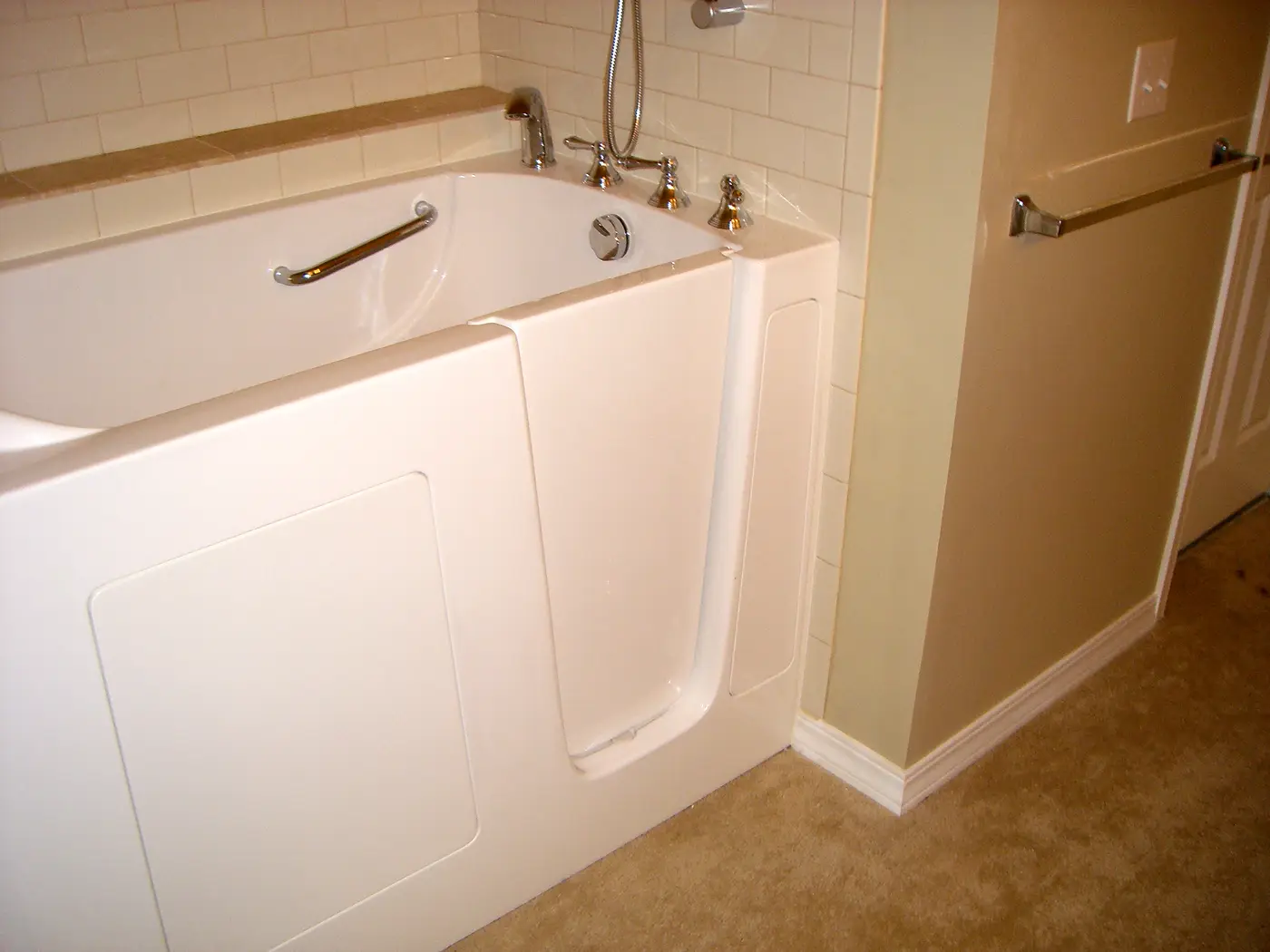
A walk-in tub is a deep bathtub with a watertight door in its side and a built-in seat at about chair height. You step through the door instead of climbing over the wall, sit down, close the door, and the tub fills around you.
How the door works
The door seals shut while the tub holds water. Doors swing inward or outward depending on the model, and the direction affects how easy it is to get in and out. Because the door stays closed while there is water inside, you get in before the tub fills and stay seated until it has drained.
Seating and support
The molded seat means you do not lower yourself to the floor of the tub. Built-in bars on the tub, plus wall-mounted grab bars where you get in and out, give you something to hold.
Who it may suit
People who love to soak and can manage stepping through the door and waiting while it fills and drains. It is not the right choice for everyone: anyone who uses a wheelchair still has to transfer onto the seat, and many people find a walk-in or curbless shower quicker for every day.
Space, plumbing and power
- Most walk-in tubs are designed to fit a standard bathtub space, but sizes vary by model.
- A deep tub holds more water than a regular tub, so your water heater must be able to fill it with warm water. We check this at the consultation.
- Some models have features that need an electrical connection.
- We measure your doorways and bathroom to make sure the tub can be brought in and installed.
Filling and draining
Filling and draining take a while, and you stay in the tub for both. How long depends on the model, the size of the tub and your plumbing, so ask about it for any model you consider.
Care and upkeep
Smooth, non-porous surfaces wipe clean. Follow the care instructions for the model you choose, including for the door seal and any jets.
Walk-in tub or walk-in shower?
Think about whether you prefer to soak or shower, how you get in and out today, the time you want to spend, and the space you have. Walk-in tubs are generally not covered by Medicare; check with your plan.
Accessibility options
Features that make a bathroom easier to use
These can be part of a new shower, or added to the bathroom you already have. No single product makes a bathroom safe on its own; what helps is the right combination, placed for how you move.
Grab bars and support rails
What it is: Sturdy bars fixed into the wall structure (not just the tile) at the shower entry, inside the shower and beside the toilet.
May help with: Steadying yourself while you step in or out, turn, sit down or stand up.
Think about: Where you reach, which hand you prefer, and what is behind the wall. Towel bars are not grab bars and should never be used as one.
Shower seats and benches
What it is: A built-in bench or a fold-down seat that tucks away when you do not need it.
May help with: Showering seated, resting, or washing your feet without balancing on one leg.
Think about: Seat height, how much room the shower has, and whether a seat that folds up works better for other people in the home.
Handheld shower systems
What it is: A showerhead on a hose, usually on a slide bar so the height can be changed.
May help with: Rinsing while seated, and making it easier for a caregiver to help.
Think about: Hose length, where the holder sits so you can reach it from the seat, and controls that are easy to grip.
Accessible shower entries
What it is: A low-threshold entry (a small lip) or a curbless entry (level with the bathroom floor).
May help with: Getting in without stepping over a tall tub wall, and, with curbless, rolling in on a shower wheelchair.
Think about: A curbless shower may need changes to the floor so water drains the right way. We check your floor at the consultation.
Slip-resistant surfaces
What it is: Textured shower floors and bases, and bathroom flooring with better grip when wet.
May help with: Better footing on wet surfaces.
Think about: No floor is slip-proof. Texture, cleaning and good lighting all play a part.
Better fixture placement
What it is: Lever handles, controls you can reach while seated, and shelves or niches at an easy height.
May help with: Less reaching, twisting and bending.
Think about: Who uses the bathroom and how. Controls placed for a seated person should still work for anyone standing.
Accessible layouts
What it is: Room to turn around, wider openings and a clear path from the door to the shower.
May help with: Moving around with a walker or wheelchair, or with someone helping you.
Think about: The size of your bathroom. Some layouts need walls or plumbing moved, which affects the scope and price.

For families
Finding the Right Fit for Someone You Love
If you are helping a parent, partner or relative, explore the options together. The right choice depends on:
- What the person who will use the bathroom prefers. It is their home and their routine.
- How they move today, and how that may change.
- How much space the bathroom has.
- Daily routines: showering or bathing, sitting or standing, alone or with help.
- The budget.
- How the bathroom will work for years, not just today.
- Cleaning and upkeep of the products you choose.
- What the installation involves, such as plumbing or floor changes.
Most of all, keep the person who will use the bathroom at the center of every decision. Family members are always welcome at the consultation.
Compare
A simple comparison
None of these is safer or better for everyone. Use this to see how they differ, then we can talk through what fits your home.
| Factor | Walk-in shower | Walk-in tub | Tub-to-shower conversion | Accessibility upgrades |
|---|---|---|---|---|
| General purpose | A shower that is easier to step or roll into | Seated bathing for people who like to soak | Replaces a tub you no longer use with a shower | Adds support and comfort to the bathroom you have |
| Getting in | A small lip, or no step at all with a curbless design | Through a door over a low step, then onto a seat | A low or no-step shower entry where the tub wall was | Depends on what you add, such as a grab bar at the entry |
| Bathing style | Showering, standing or seated | Soaking while seated; many models include a handheld shower | Showering, standing or seated | Keeps your current tub or shower |
| Space | Fits a tub space or larger; curbless may need floor work | Usually fits a standard tub space, but sizes vary by model | Uses the space of the existing tub | Works in most bathrooms |
| Accessibility features | Grab bars, seat, handheld shower, easy-reach controls | Built-in seat and bars, controls within reach of the seat | The same options as a walk-in shower | Grab bars, seats, handheld shower, better fixture placement |
| Upkeep | Depends on the wall and floor materials you choose | Follow the model’s care instructions, including the door seal | Depends on the wall and floor materials you choose | Grab bars and fixtures wipe clean with the rest of the bathroom |
More guides
Take the next step
Let’s Explore the Right Bathroom Solution for You.
Every home and homeowner is different. We would be glad to help you understand your options and determine what may work best for your space and needs.